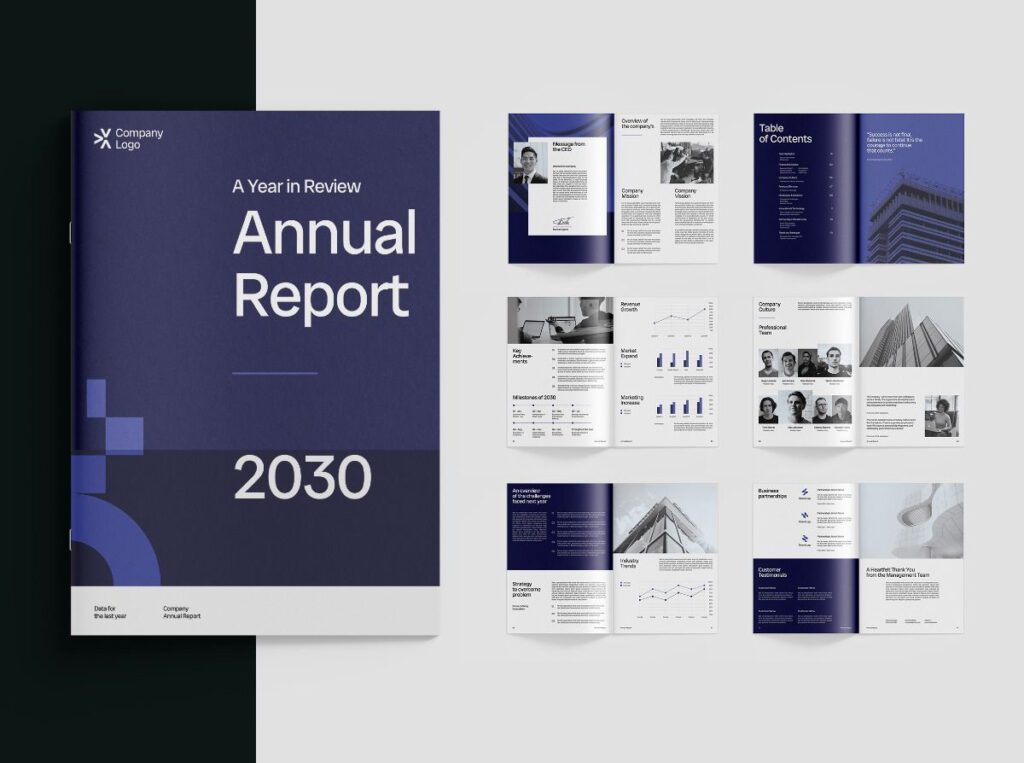
Corporate reporting has evolved beyond financial disclosure alone. Many organisations today find themselves deciding between preparing an Annual Report or an Integrated Report, or understanding how the two differ in purpose, scope, and expectation.
This article explains the difference between an annual report and an integrated report, why the distinction matters, and how companies should approach reporting decisions in practice.
What Is an Annual Report
An annual report is a formal, statutory document that presents a company’s financial performance, governance disclosures, management commentary, and operational overview for a defined financial year.
It is primarily prepared to meet:
- Regulatory and statutory requirements
- Shareholder and investor communication needs
- Board and governance review
- Audit and compliance expectations
Annual reports focus on accuracy, completeness, and consistency. They are reviewed closely by regulators, auditors, shareholders, and other stakeholders who rely on formal disclosures.
For most companies, the annual report is a mandatory reporting requirement rather than a discretionary communication tool.
What Is an Integrated Report
An integrated report goes beyond traditional financial reporting. It aims to explain how an organisation creates value over time by connecting financial performance with strategy, governance, sustainability, and future outlook.
Integrated reports are typically prepared in line with the Integrated Reporting (IR) framework and focus on:
- Long-term value creation
- Strategic objectives and business model
- Financial and non-financial performance
- Environmental, social, and governance considerations
Unlike annual reports, integrated reports are not always mandatory. They are often adopted by organisations seeking a more holistic and forward-looking approach to corporate reporting.
Key Differences Between Annual Report and Integrated Report
The primary difference lies in intent and scope.
An annual report concentrates on what happened during the financial year. It documents results, disclosures, and compliance in a structured and factual manner.
An integrated report explains how results are connected to strategy, resources, risks, and future value creation. It places performance in a broader context.
Annual reports are compliance-driven. Integrated reports are framework-driven.
Annual report design prioritises clarity, hierarchy, and accurate data presentation. Integrated report design requires stronger narrative structure to connect strategy, performance, and sustainability.
Which Companies Typically Use Each Format
Annual reports are prepared by:
- Listed companies
- Large private companies
- Organisations with statutory reporting obligations
Integrated reports are more commonly adopted by:
- Listed companies with mature governance structures
- Organisations with strong ESG focus
- Companies communicating long-term value creation to investors
Many organisations prepare both, with the integrated report complementing statutory annual reporting rather than replacing it.
Design Considerations for Annual and Integrated Reports
Design plays a functional role in both formats, but the emphasis differs.
Annual report design focuses on:
- Clear sectioning and navigation
- Readable presentation of financial data
- Consistency across disclosures
- Alignment with corporate brand standards
Integrated report design additionally focuses on:
- Connecting narrative and data
- Visual explanation of strategy and value creation
- Clear linkage between financial and non-financial information
In both cases, design should support understanding, not distract from content.
Common Misconceptions
A common misconception is that an integrated report can replace an annual report. In most cases, statutory annual reporting requirements still apply.
Another misconception is treating integrated reports as marketing documents. Overly promotional language weakens credibility and conflicts with the intent of integrated reporting frameworks.
Both formats demand discipline, accuracy, and structured presentation.
How Companies Should Decide
The decision is not whether to prepare an annual report or an integrated report, but how each fits into the organisation’s reporting obligations and communication strategy.
Companies should consider:
- Statutory and regulatory requirements
- Stakeholder expectations
- Internal reporting maturity
- Availability of reliable non-financial data
For many organisations, the annual report remains the foundation, with integrated reporting introduced progressively.
Final Thoughts
Annual reports and integrated reports serve different but related purposes.
An annual report fulfils formal reporting obligations and provides a clear account of performance and governance. An integrated report offers a broader view of how the organisation creates value over time.
Understanding the difference allows companies to choose the right reporting approach, structure content appropriately, and apply annual report design principles that support clarity, credibility, and compliance.